Stomach Cancer
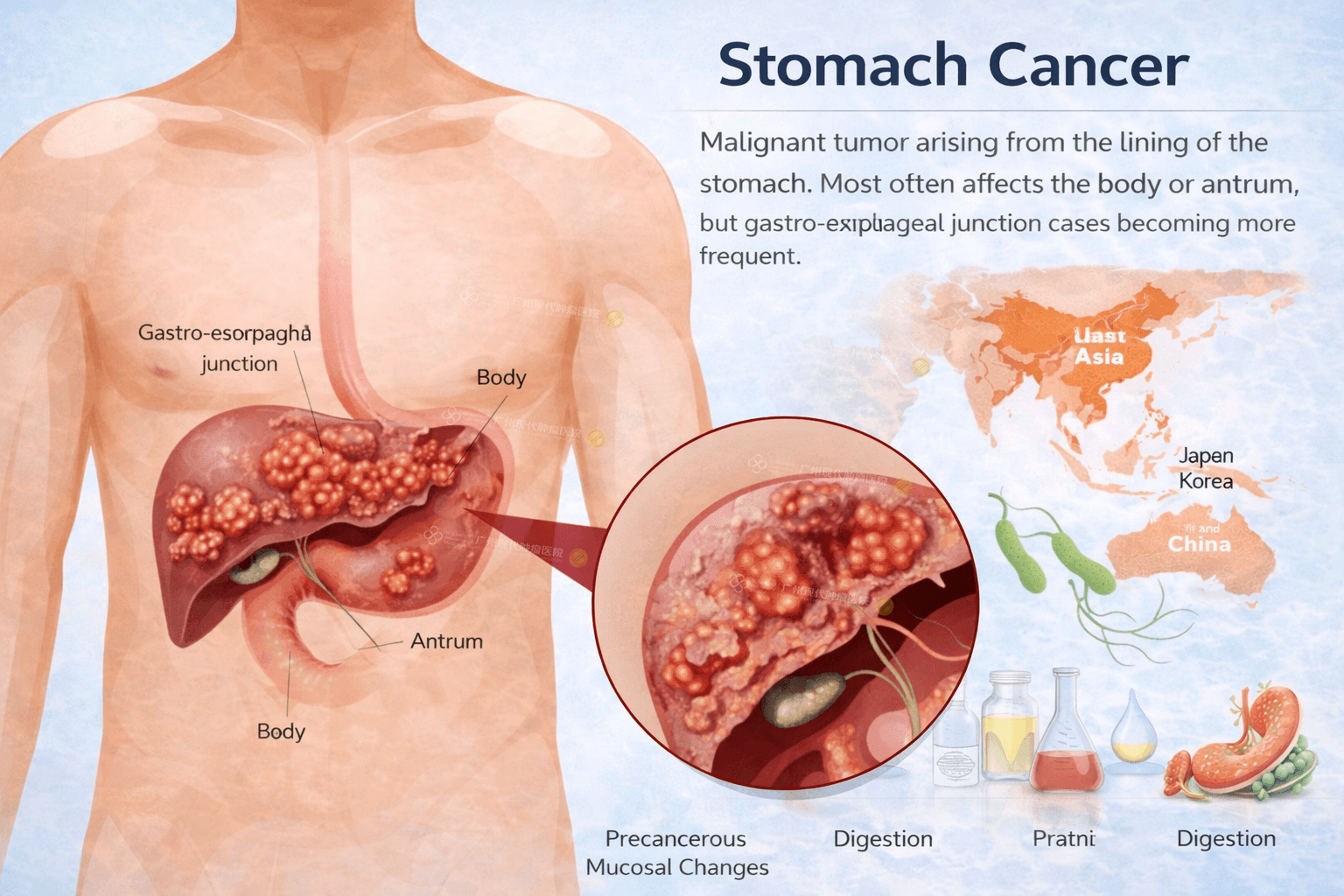
Stomach cancer, also known asgastric cancer, is a malignant tumor that arises from the lining of the stomach. Most stomach cancers develop slowly over many years, often beginning as precancerous changes in the gastric mucosa before progressing into invasive cancer.
The stomach is a hollow muscular organ located in the upper abdomen that plays a critical role in digestion. Cancer can develop in any part of the stomach, but it most commonly affects thebody and antrum. In recent years, cancers near thegastro-esophageal junctionhave become more common.
Despite declining incidence globally, stomach cancer remains amajor cause of cancer-related mortality, especially in East Asia, including Japan, Korea, and China.

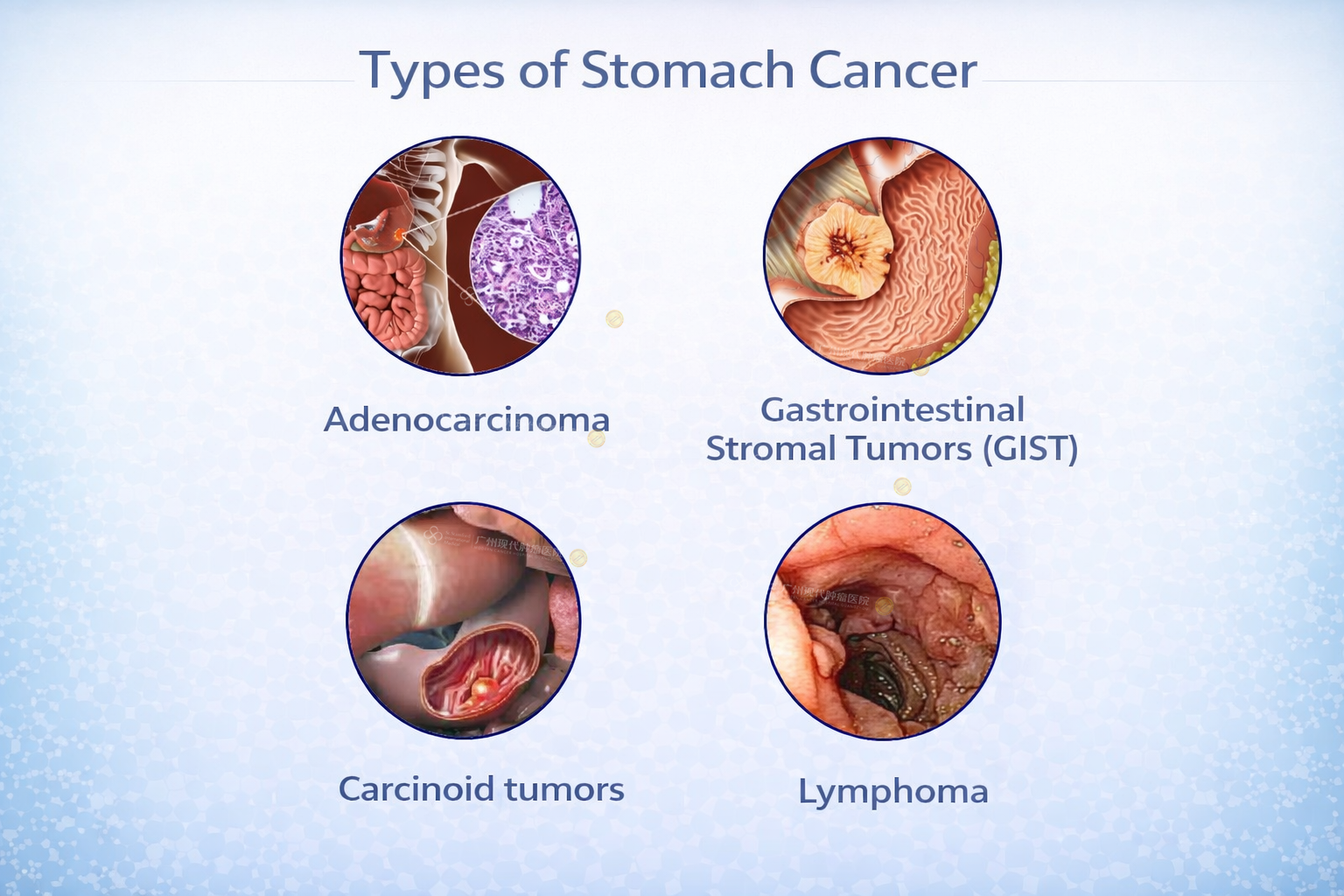
Stomach cancer is classified based on histology and growth pattern:
1. Adenocarcinoma (≈90–95%)
The most common type, originating from gland-forming epithelial cells of the stomach lining.
Intestinal type
Gland-forming
Linked to chronic gastritis andHelicobacter pylori
More common in older adults
Diffuse type
Poorly differentiated
Includessignet-ring cell carcinoma
More aggressive, affects younger patients
Leads to rigid stomach wall (linitis plastica)
2. Gastrointestinal Stromal Tumors (GIST)
Arise from interstitial cells of Cajal
Rare, treated differently from adenocarcinoma
3. Gastric Lymphoma
Originates from lymphoid tissue
Often associated withH. pylori
4. Neuroendocrine Tumors
Rare
Usually slow-growing
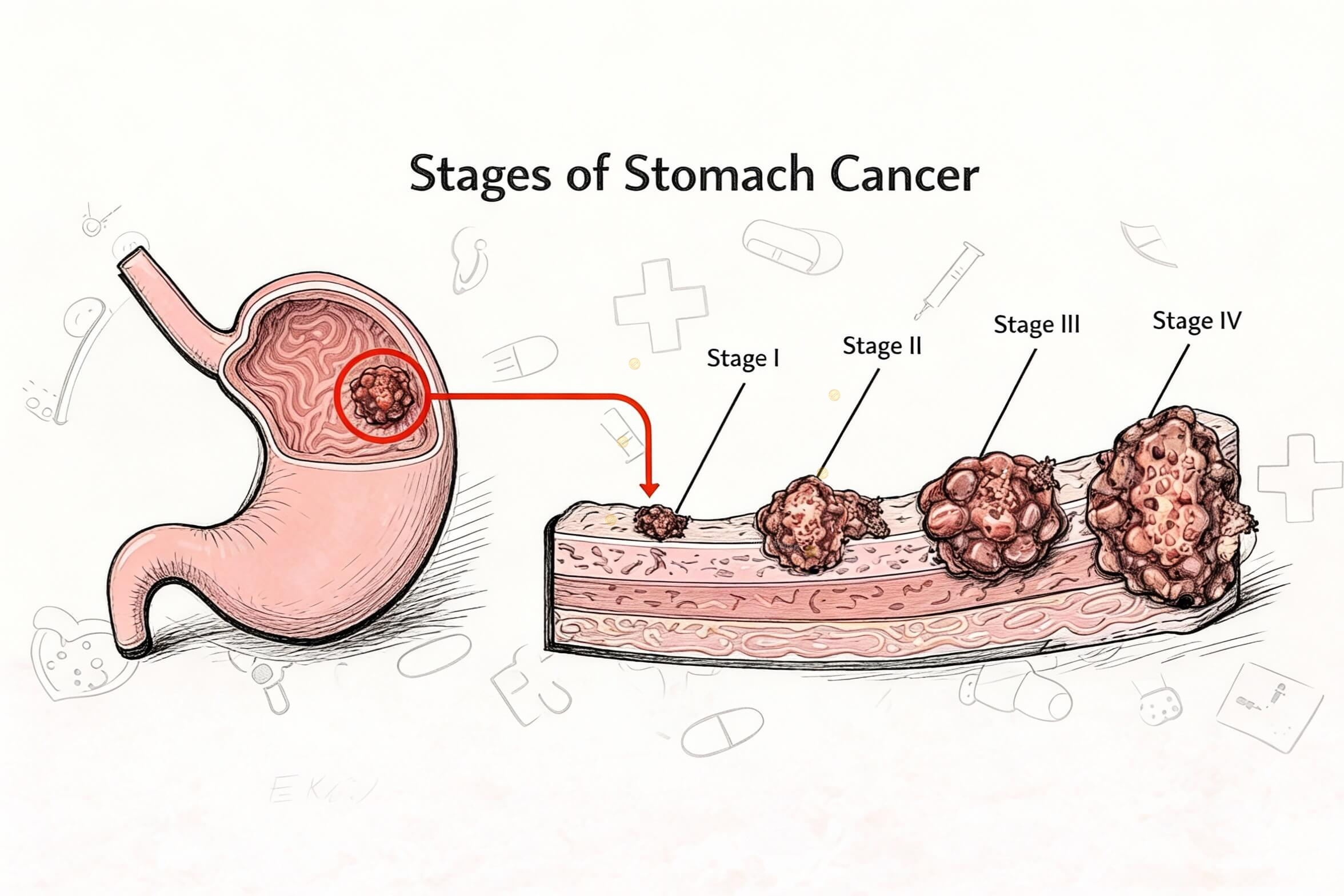
Stages
Staging follows theTNM system:
T (Tumor depth)– how deeply the cancer invades the stomach wall
N (Nodes)– lymph node involvement
M (Metastasis)– spread to distant organs
Stage Overview
Stage 0: Carcinoma in situ
Stage I: Tumor confined to stomach wall
Stage II–III: Deeper invasion with lymph node spread
Stage IV: Distant metastasis (liver, peritoneum, lung)
Early-stage disease has a much better prognosis, but many patients present at advanced stages due to vague early symptoms.
Risk Factors
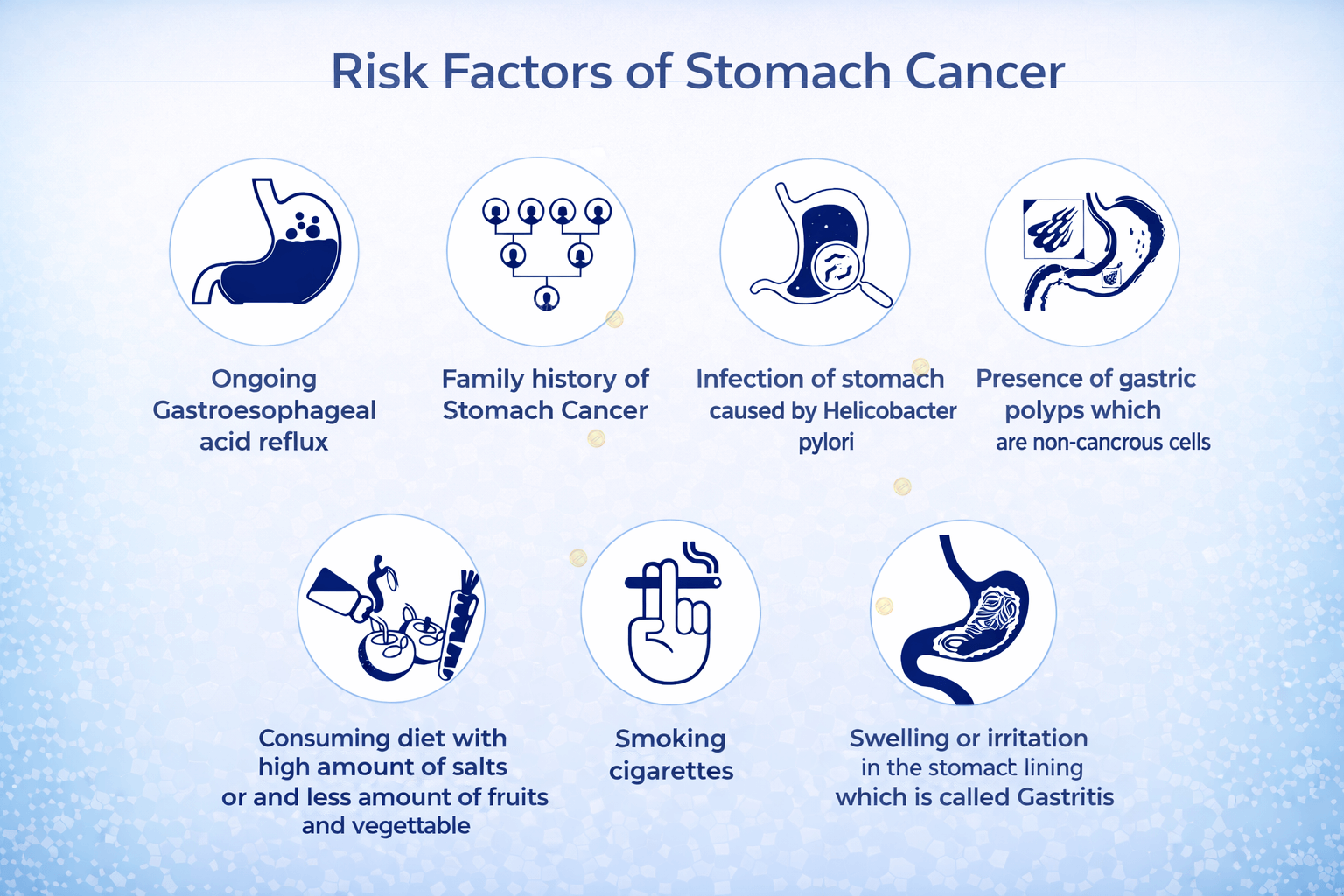
Major risk factors include:
Helicobacter pyloriinfection
Chronic atrophic gastritis
Intestinal metaplasia
Smoking
High-salt and smoked foods
Low fruit and vegetable intake
Family history of gastric cancer
Genetic syndromes (e.g. CDH1 mutation)
Previous gastric surgery
Pernicious anemia
Male gender
Age > 50 years
Symptoms
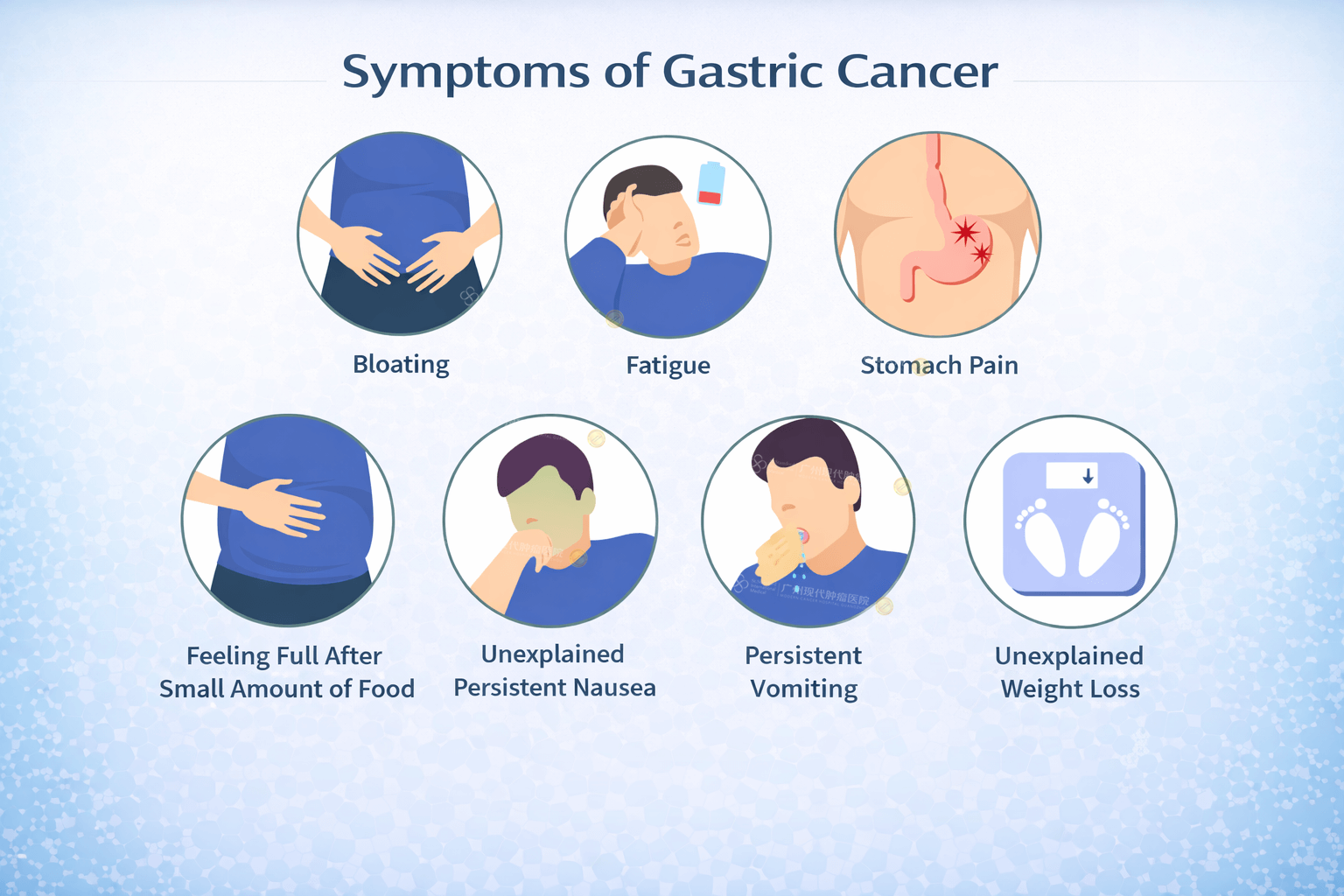
Indigestion
Early satiety
Mild epigastric discomfort
Nausea
Advanced-stage
Persistent upper abdominal pain
Unintentional weight loss
Loss of appetite
Vomiting
Gastrointestinal bleeding (melena or hematemesis)
Iron-deficiency anemia
Dysphagia (if near gastro-esophageal junction)
Ascites in late disease
Symptoms are often nonspecific, leading to delayed diagnosis.
Diagnosis
Early-stage (often subtle or absent)
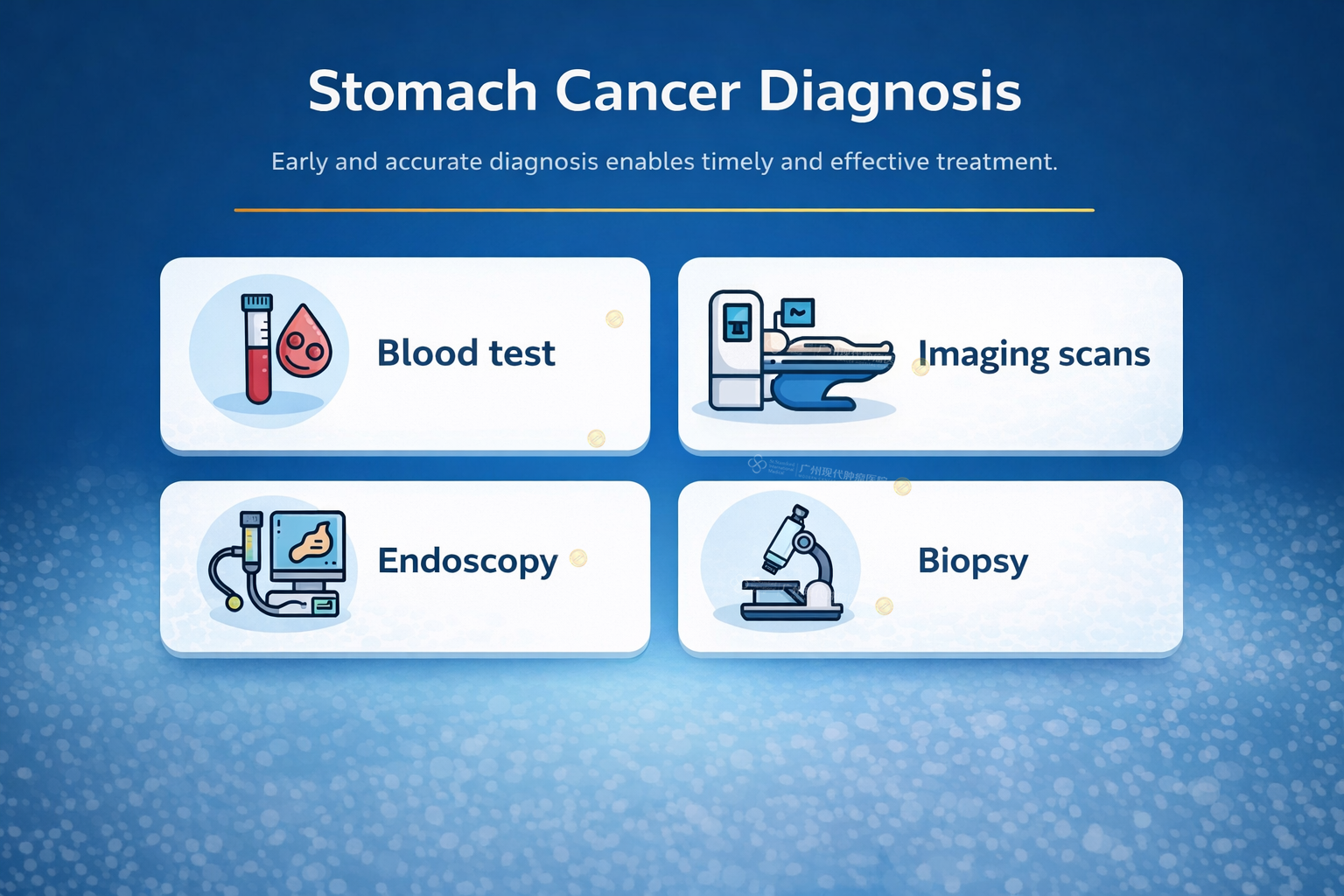
1. Upper Gastrointestinal Endoscopy
Gold standard
Allows direct visualization and biopsy
2. Biopsy & Histopathology
Confirms cancer type and grade
3. Imaging
CT scan (staging and metastasis)
Endoscopic ultrasound (depth and nodes)
PET-CT (selected cases)
4. Laboratory Tests
Anemia
Tumor markers (CEA, CA 19-9 – supportive, not diagnostic)
Facts (FAQ)
Q1: Is stomach cancer curable?
Yes, if detected early and treated appropriately.
Q2: CanH. pylorieradication prevent stomach cancer?
Yes, treatment significantly reduces risk.
Q3: Is stomach cancer hereditary?
Most cases are sporadic, but some genetic syndromes increase risk.
Q4: Does diet matter?
Yes. High salt, smoked foods increase risk, while fruits and vegetables are protective.
Q5: Why is stomach cancer often detected late?
Early symptoms are vague and easily ignored.